News

How Does an Excavator Long Reach Arm Improve Excavation Performance?

2026-09-07 0 Leave me a message

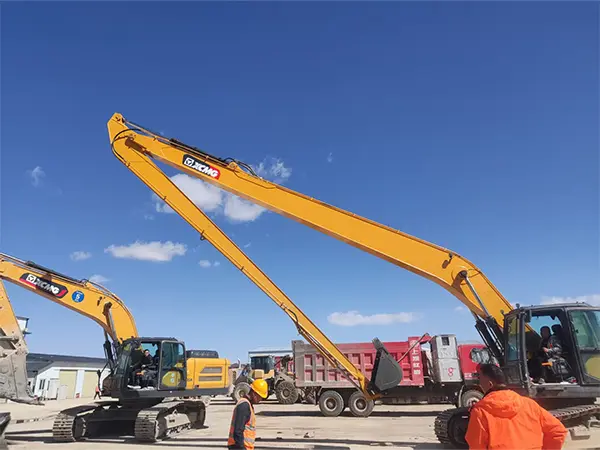
An excavator long reach arm can extend digging capabilities far beyond those of a standard boom and arm configuration. From deep excavation and dredging to slope shaping and pond cleaning, the right long reach system helps contractors access difficult areas while keeping the excavator at a safer and more practical working distance.

excavator long reach arm

Excavation projects often involve challenging working conditions, including deep trenches, unstable slopes, waterways, high embankments and restricted-access areas. A conventional excavator may not provide sufficient reach for these applications, forcing operators to reposition the machine repeatedly or use additional equipment. An Excavator Long Reach Arm is designed to address these limitations by increasing horizontal and vertical working range.

This guide explains how long reach arms work, where they are used, what advantages they offer, how to select a suitable configuration, and which factors affect productivity, stability, durability and operating safety. It also provides practical guidance for contractors, equipment distributors and project managers evaluating long-reach excavation solutions.

Table of Contents

  1. What Is an Excavator Long Reach Arm?
  2. Why Do Excavation Projects Need Extended Reach?
  3. Where Is a Long Reach Arm Commonly Used?
  4. What Are the Main Performance Benefits?
  5. What Determines Long Reach Arm Performance?
  6. What Should Be Considered Before Purchasing?
  7. How Does It Compare With a Standard Excavator Arm?
  8. How Can Operators Maintain Long Reach Equipment?
  9. What Common Mistakes Should Be Avoided?
  10. Frequently Asked Questions
  11. Conclusion
  12. Contact Us

What Is an Excavator Long Reach Arm?

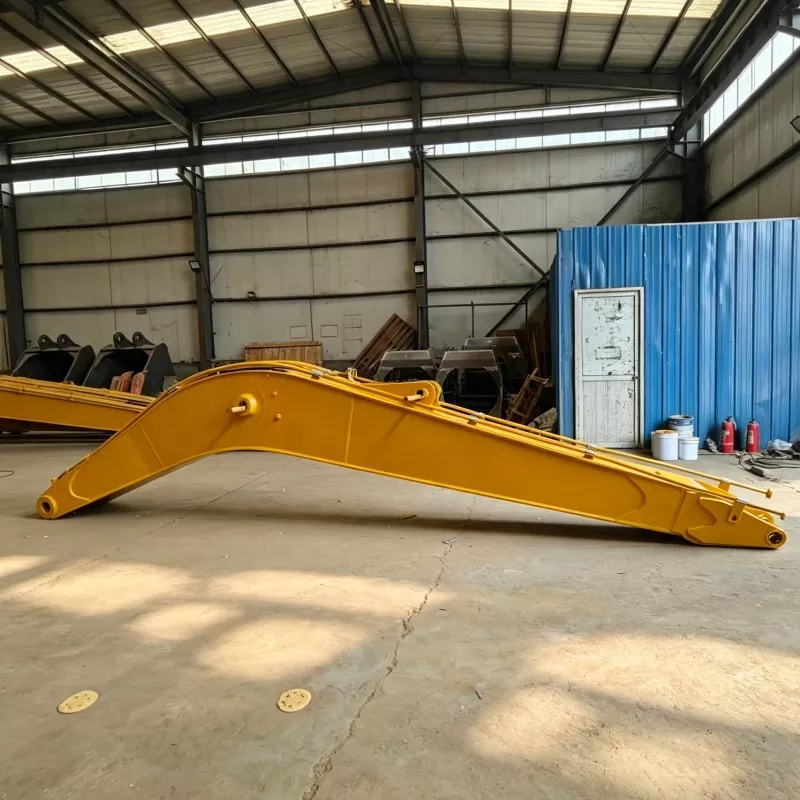
An Excavator Long Reach Arm is an extended boom-and-arm assembly designed to increase the operating radius of an excavator. Compared with a standard excavator front attachment, the extended configuration allows the bucket or other working attachment to reach farther horizontally and vertically.

The system normally consists of an extended boom, extended dipper arm, hydraulic cylinders, pins, bushings, hydraulic lines and connection components. Depending on the machine and application, the arm can be engineered for different working depths, horizontal reaches and attachment loads.

Long reach equipment is not simply a matter of adding length to the original arm. Increasing reach changes the load distribution around the excavator's working center. Therefore, structural strength, hydraulic capacity, machine stability and attachment weight must be considered together.

Key Point: A properly engineered long reach system balances extended working range with structural durability, hydraulic performance and machine stability.

Why Do Excavation Projects Need Extended Reach?

Many excavation tasks are difficult not because the material is especially hard, but because the excavator cannot safely position itself close enough to the working area. This problem is common around waterways, deep trenches, unstable slopes and protected areas.

Repeated machine repositioning can consume valuable operating time and increase ground disturbance. In some projects, moving the excavator closer to the excavation zone may also increase safety risks.

  • Greater working distance: Operators can excavate areas beyond the normal reach of a standard arm.
  • Reduced repositioning: A wider working radius can allow more material to be handled from a single machine position.
  • Improved access: The excavator can remain on stable ground while reaching slopes, trenches or water channels.
  • Better project flexibility: One excavator configuration may handle multiple specialized applications.
  • Reduced ground disturbance: Fewer machine movements can help protect finished surfaces and sensitive work zones.

Where Is a Long Reach Arm Commonly Used?

The versatility of an Excavator Long Reach Arm makes it suitable for numerous civil engineering, environmental and construction applications. The best configuration depends on the machine's operating weight, hydraulic system, required reach and attachment.

Application Main Requirement Long Reach Advantage
Dredging Extended horizontal and vertical reach Reaches waterways while the excavator remains on shore
Deep excavation Greater digging depth Provides access to deeper work zones
Slope shaping Safe stand-off distance Allows work from a more stable position
Pond cleaning Long operating radius Reduces the need to enter wet or soft ground
Bank maintenance Reach over embankments Improves access to difficult-to-position areas

What Are the Main Performance Benefits?

Extended Working Range

Extended Working Range

The most obvious advantage is increased reach. Depending on the design and excavator model, the extended arm can provide substantially greater digging depth and horizontal coverage than the original configuration.

Improved Site Accessibility

Long reach equipment is particularly valuable when the machine cannot approach the work area directly. This includes projects beside rivers, ponds, steep slopes, trenches and restricted construction zones.

Higher Operational Flexibility

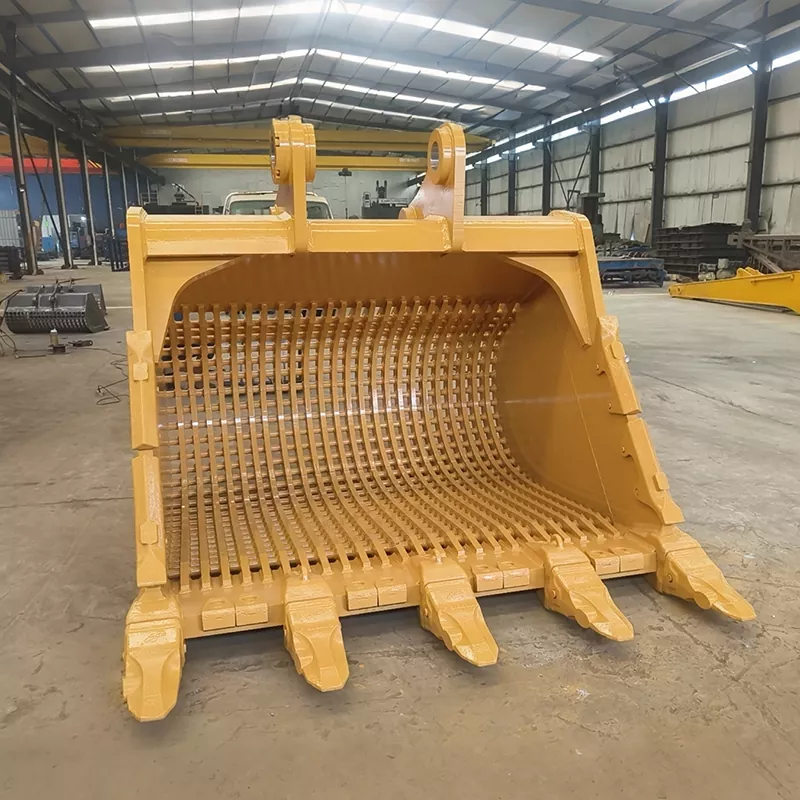
A properly matched long reach system can support different attachments, including digging buckets, grading buckets, dredging buckets and other specialized tools. This gives contractors more flexibility when project requirements change.

Potential Productivity Improvements

When the machine can cover a larger area from one stable position, fewer repositioning cycles may be required. This can help improve workflow efficiency, especially on projects involving large excavation zones.

Reach

Access deeper and farther working areas.

Access

Operate from practical stand-off positions.

Flexibility

Support different applications and attachments.

Efficiency

Reduce unnecessary machine repositioning.

What Determines Long Reach Arm Performance?

Performance depends on much more than overall length. A reliable system must be engineered around the base excavator and the intended working conditions.

  1. Material selection: High-strength structural steel and appropriate fabrication methods help withstand repeated loading.
  2. Structural design: Reinforcement should be positioned according to expected stress concentrations rather than simply adding excessive material.
  3. Hydraulic compatibility: Cylinder dimensions, hydraulic pressure and flow must match the excavator.
  4. Pin and bushing quality: Accurate machining and suitable wear components help reduce excessive movement at connection points.
  5. Attachment matching: Bucket weight and capacity affect the load placed on the extended arm.
  6. Machine stability: Longer reach increases the moment acting on the excavator, making machine configuration and operating conditions especially important.

What Should Be Considered Before Purchasing?

Selecting a long reach arm should begin with the application rather than the desired maximum length. An oversized configuration may reduce lifting capacity, stability or practical digging performance if it is not correctly matched to the excavator.

Evaluation Factor Questions to Ask
Excavator model Is the arm engineered for the machine's weight and mounting dimensions?
Required reach What horizontal reach and digging depth does the project actually require?
Attachment Will the system use a standard bucket, dredging bucket or another tool?
Hydraulics Are cylinders, hoses and hydraulic connections properly matched?
Working environment Will the arm operate in water, mud, abrasive soil or demanding conditions?
Service support Are replacement wear parts and technical assistance available?

How Does It Compare With a Standard Excavator Arm?

A standard arm remains the better solution for many general excavation and heavy-duty digging tasks. Its shorter geometry usually provides a favorable balance between breakout force, lifting capacity and machine stability.

A long reach configuration focuses more heavily on access and working range. Therefore, the correct choice depends on the job rather than on the assumption that longer always means better.

Feature Standard Arm Long Reach Arm
Working radius Normal Extended
Deep excavation Suitable for conventional depths Better suited to deeper work
Stability at maximum reach Generally favorable Requires careful configuration
Specialized applications Limited Excellent for long-distance access

How Can Operators Maintain Long Reach Equipment?

Because extended arms experience significant mechanical loads, regular inspection is essential. Maintenance should follow the excavator and attachment manufacturer's recommendations and the actual working environment.

  • Inspect welds and structural areas regularly for cracks, deformation or unusual wear.
  • Check pins, bushings and connection points for excessive clearance.
  • Inspect hydraulic hoses and fittings for leakage, abrasion or damage.
  • Lubricate specified pivot points at appropriate intervals.
  • Check attachment mounting components before operation.
  • Keep the arm and hydraulic components clean, especially after muddy or underwater work.
  • Investigate unusual vibration, movement or hydraulic behavior before continuing intensive operation.
Maintenance Reminder: Do not wait for visible structural failure before inspecting an extended arm. Early detection of wear can help prevent more expensive repairs and unexpected downtime.
What Common Mistakes Should Be Avoided?

  1. Choosing maximum reach without considering stability.

    A longer arm changes the machine's load characteristics. Reach requirements should always be evaluated together with machine capacity and working conditions.

  2. Using an oversized attachment.

    An excessively heavy bucket can place unnecessary stress on the arm, boom, cylinders and excavator.

  3. Ignoring hydraulic compatibility.

    A mechanically compatible arm may still perform poorly if hydraulic cylinders and connections are not correctly matched.

  4. Neglecting transportation requirements.

    Long reach equipment may have different transportation and storage requirements than a conventional front attachment.

  5. Skipping routine inspections.

    High-load applications make inspection and lubrication especially important for maintaining dependable performance.

Frequently Asked Questions

Can a long reach arm be installed on any excavator?

No. The arm must be matched to the excavator's operating weight, mounting dimensions, hydraulic system, boom configuration and intended attachment. Professional compatibility assessment is recommended before installation.

Is a long reach arm suitable for dredging?

Yes. Dredging is one of the common applications for long reach excavator configurations because the excavator can work from the bank while reaching farther into a waterway, pond or channel. The configuration should be selected according to required depth, reach, bucket type and operating environment.

Does a longer arm always provide better performance?

Not necessarily. Greater reach can reduce available digging or lifting performance depending on the machine and load. The best design is the one that provides enough reach for the application while maintaining appropriate structural and operational characteristics.

What attachments can be used with a long reach excavator arm?

Depending on the arm design and hydraulic configuration, attachments may include excavation buckets, grading buckets, dredging buckets and other specialized tools. Attachment weight and dimensions should always be considered when matching the system.

How can I determine the appropriate arm length?

Start with the required working depth and horizontal reach. Then consider excavator size, attachment weight, ground conditions, hydraulic capacity and stability. A manufacturer or engineering team can use these parameters to recommend a suitable configuration.

What makes a long reach arm durable?

Durability depends on appropriate structural design, suitable steel, accurate fabrication, reliable pins and bushings, correctly matched hydraulic components and proper maintenance. Quality control during manufacturing is equally important for long-term reliability.

Conclusion

An Excavator Long Reach Arm can transform the working capabilities of an excavator when conventional reach is not sufficient. Its greatest value comes from providing access to deep, distant or difficult-to-reach work areas while allowing the excavator to remain in a practical operating position.

However, successful application depends on more than simply extending the boom and arm. Excavator compatibility, structural strength, hydraulic performance, attachment selection, stability and maintenance all influence the final result. By defining project requirements before selecting equipment, contractors can obtain a configuration that delivers useful reach without unnecessarily compromising performance or reliability.

For contractors, equipment dealers and project operators, working with an experienced manufacturer can make the selection and customization process more efficient. A well-designed long reach system can become a valuable solution for dredging, deep excavation, slope work, pond cleaning, bank maintenance and other specialized projects.

Need a Reliable Excavator Long Reach Arm?

Jining Xingchuang Machinery Manufacturing Co., Ltd. provides professional excavator attachment solutions designed around different machine models and working requirements. Whether your project involves dredging, deep excavation, slope shaping, pond cleaning or other long-distance excavation tasks, selecting the right configuration can make a significant difference in productivity and equipment reliability.

Contact us to discuss your excavator model, required working range and application needs, and find a long reach solution that fits your project.


Related News
Leave me a message
X
We use cookies to offer you a better browsing experience, analyze site traffic and personalize content. By using this site, you agree to our use of cookies.Privacy Policy
RejectAccept