What Makes an Excavator Hydraulic Rotary Screen Essential for Efficient Material Processing?
An Excavator Hydraulic Rotary Screen helps contractors separate soil, gravel, stones, and other bulk materials directly at the job site. Powered by an excavator's hydraulic system, this attachment combines mobility with practical material screening, potentially reducing unnecessary transportation, handling time, and waste. This guide explains how hydraulic rotary screens work, where they deliver value, how to choose a compatible model, and which operating and maintenance practices help improve screening performance and equipment service life.
Article Outline
- What Is an Excavator Hydraulic Rotary Screen?
- How Does an Excavator Hydraulic Rotary Screen Work?
- Key Benefits for Construction and Material Handling
- Common Applications Across Industries
- How to Select the Right Hydraulic Rotary Screen
- Hydraulic Rotary Screens vs. Traditional Screening Equipment
- Operation and Maintenance Best Practices
- How to Evaluate Total Operating Costs
- Frequently Asked Questions
1. What Is an Excavator Hydraulic Rotary Screen?
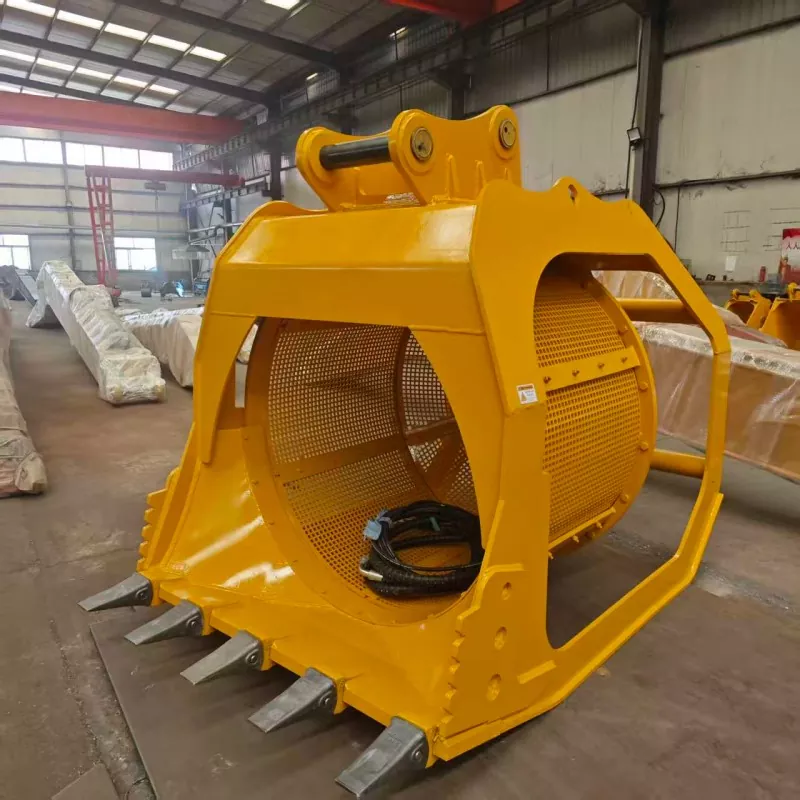
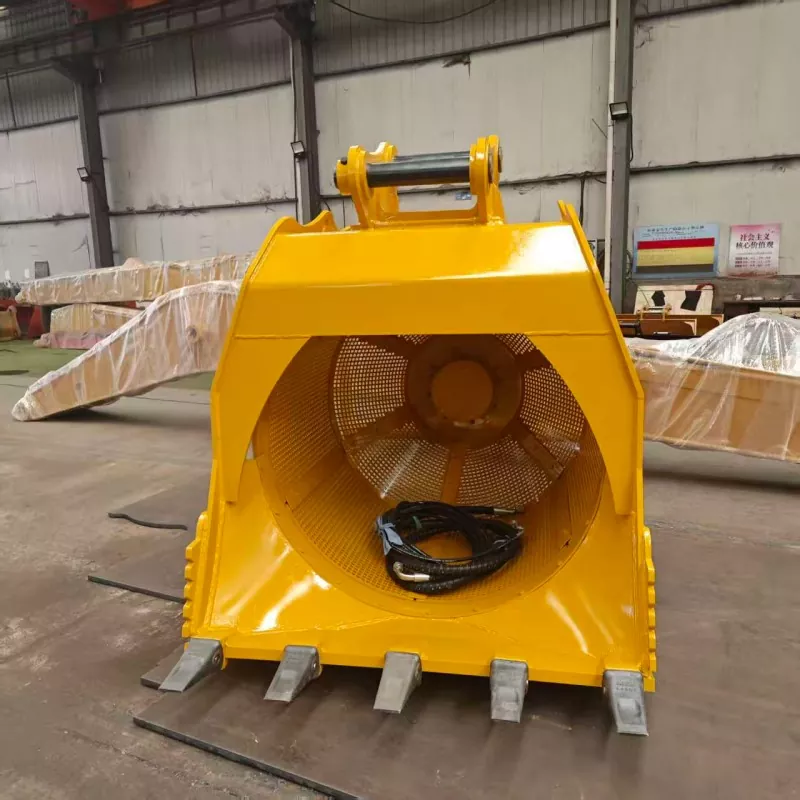
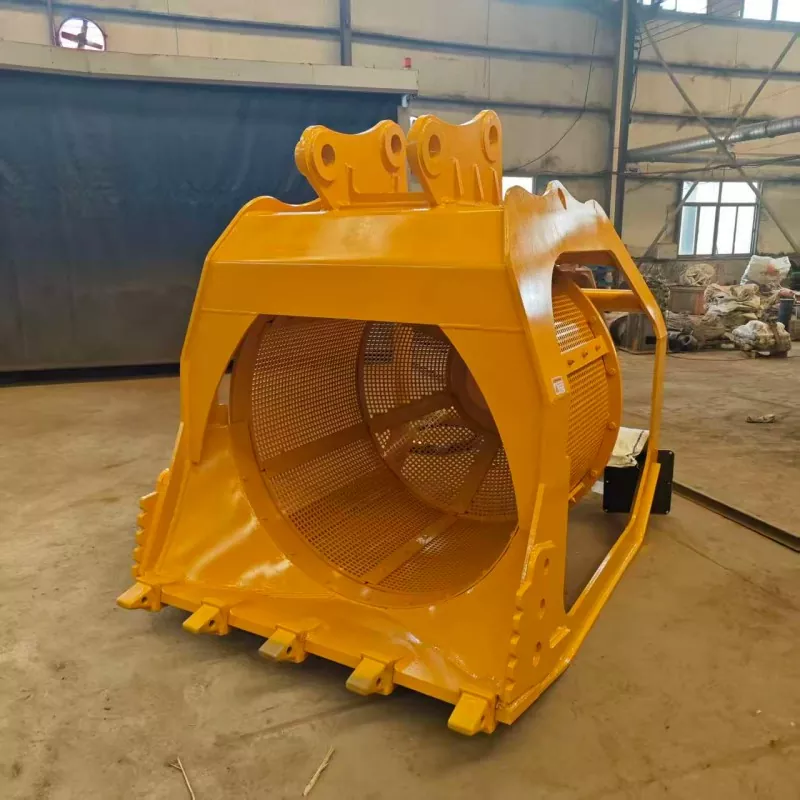
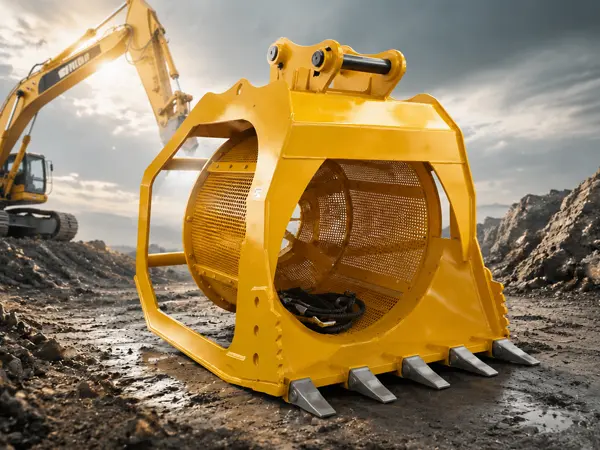
An Excavator Hydraulic Rotary Screen is a specialized attachment designed to separate bulk materials by particle size. Connected to a compatible excavator, it uses hydraulic power to rotate a screening drum or basket, allowing smaller particles to pass through the openings while larger pieces remain inside for separate handling.
Unlike a conventional digging bucket, which primarily collects and moves material, a hydraulic rotary screen adds a screening function to the excavator. Contractors can process suitable materials close to where they are excavated, reducing the need to transport every load to a separate screening station.
The attachment is particularly useful when projects require flexible material separation, on-site recycling, or the recovery of reusable soil and aggregates. Its performance depends on the machine configuration, screen aperture, material characteristics, and operating conditions.
Main Components and Their Functions
- Screening drum: Rotates the material so particles can contact the screening surface.
- Screen panels or openings: Determine which particle sizes can pass through.
- Hydraulic motor and drive system: Convert hydraulic power into rotational movement.
- Structural frame: Supports the attachment and withstands working loads.
- Mounting interface: Connects the attachment to the excavator arm or compatible quick coupler.
- Hydraulic hoses and connections: Deliver hydraulic fluid to the drive system according to the manufacturer's requirements.
For equipment buyers, understanding these components makes it easier to evaluate durability, compatibility, maintenance access, and replacement-part requirements before purchasing.
2. How Does an Excavator Hydraulic Rotary Screen Work?
The screening process combines excavator handling capabilities with controlled rotary movement. Although the exact design varies by model, the basic operating sequence follows four stages.
Step 1: Load the Material
The excavator collects suitable material and feeds it into the screening attachment. Consistent loading helps prevent overfilling and allows material to move freely through the screening area.
Step 2: Activate Hydraulic Rotation
Hydraulic oil supplied by the excavator drives the motor, which turns the screening drum. The rotating movement tumbles and redistributes the material, helping expose different particles to the screen openings.
Step 3: Separate Material by Size
Particles small enough to pass through the openings fall out of the screening surface. Larger pieces remain inside the drum until they are discharged. The resulting separation depends on aperture dimensions, material shape, moisture content, loading conditions, and operating technique.
Step 4: Collect and Reuse the Output
The separated fractions can be collected for different purposes. Depending on project specifications and material quality, screened soil may be reused for landscaping or backfilling, while suitable aggregates may be directed to additional processing.
Important: Screening does not automatically guarantee that a material meets a construction specification. Where grading, contamination, or soil quality is critical, test the processed material and confirm that it meets the project's requirements.
3. What Benefits Does a Hydraulic Rotary Screen Offer?
For contractors managing tight schedules, limited workspaces, or mixed excavated materials, the main value of an Excavator Hydraulic Rotary Screen lies in simplifying the material handling process.
On-Site Screening and Less Material Transportation
Suitable materials can be screened close to the excavation area instead of being transported to a separate processing location. This can reduce repeated handling and unnecessary hauling when the site layout, output quality, and production volume support on-site processing.
Better Use of Existing Equipment
The attachment uses the excavator as its carrier and hydraulic power source. Contractors with compatible machines may add screening capability without purchasing a separate screening plant for every small or mobile job.
Flexible Material Separation
Different screen openings can help separate materials according to project needs. Depending on the design, a suitable rotary screen may process excavated soil, sand, gravel, compost, selected demolition waste, and other compatible bulk materials.
Support for Material Reuse
Separating reusable material from oversized particles can support recycling and resource recovery. When the screened output meets the required quality standards, contractors may reduce disposal volumes and make better use of available resources.
Improved Job-Site Flexibility
Because the attachment moves with the excavator, operators can relocate screening activities as work progresses. This is useful on landscaping sites, road projects, utility trenches, and other jobs where material sources change frequently.
| Potential Benefit | Practical Value | What to Evaluate |
|---|---|---|
| Reduced hauling | Less unnecessary material movement | Distance to processing and disposal locations |
| Flexible screening | Separation suited to different tasks | Available screen apertures and material type |
| Equipment utilization | Additional functionality from a compatible excavator | Hydraulic capacity and attachment changeover time |
| Material recovery | Potential reuse of suitable screened fractions | Output quality and project specifications |
4. What Industries Use Excavator Hydraulic Rotary Screens?
Construction and Earthmoving
Construction projects frequently generate mixed excavated material containing soil, stones, and other particles. A suitable rotary screen can separate reusable fractions for selected backfilling, grading, and site preparation tasks.
Landscaping and Soil Preparation
Landscaping contractors often need relatively consistent soil for planting beds, lawns, and ground preparation. Screening can remove selected stones and oversized debris, helping prepare material for subsequent use.
Demolition and Construction Waste Recycling
After demolition, suitable screening equipment can help separate selected fine fractions from larger fragments. The material must be compatible with the attachment, and reinforcing steel, hazardous substances, or other contaminants may require dedicated separation methods before screening.
Road Construction and Infrastructure
Roadworks and utility projects may involve excavated soil, gravel, and aggregate mixtures. On-site screening can support material preparation and backfilling when the output meets engineering requirements.
Mining, Quarries, and Aggregate Handling
In selected applications, rotary screening attachments can provide preliminary separation of suitable bulk materials. Highly abrasive rock, large feed pieces, or high-volume production may require a purpose-built screening plant or a heavier-duty attachment.
Dredging and Environmental Projects
Suitable configurations may help separate sand, stones, and other particles from selected dredged materials. Wet screening performance depends on the attachment design, hydraulic protection, sediment characteristics, and any applicable environmental requirements.
Before selecting an attachment, buyers should confirm that the actual feed material, moisture level, contamination, and production target are within the manufacturer's recommended operating conditions.
5. How to Select the Right Excavator Hydraulic Rotary Screen
A suitable attachment must match both the excavator and the screening task. Choosing by price or excavator tonnage alone can lead to poor performance, installation difficulties, excessive wear, or hydraulic problems.
Check Excavator Compatibility
Confirm the excavator make, model, operating weight, mounting dimensions, and rated lifting capacity. The attachment's weight and working loads must remain within the carrier's permitted operating limits.
Verify Hydraulic Flow and Pressure
The excavator's auxiliary hydraulic circuit must supply the flow and pressure required by the attachment. Incorrect settings may cause slow rotation, insufficient performance, overheating, or damage to hydraulic components.
Also confirm the required return-line arrangement, case-drain connection if specified, hose fittings, and any flow-control requirements. Use verified machine documentation and the attachment manufacturer's technical specifications rather than relying on generic estimates.
Choose the Correct Screen Aperture
The screen opening determines the nominal particle size that can pass through, but it does not guarantee an exact final grading. Particle shape, moisture, material distribution, and operating conditions all influence the result.
- Identify the required output size or grading range.
- Describe the typical and maximum feed particle sizes.
- Explain whether the material is dry, wet, sticky, or abrasive.
- Ask whether interchangeable or customized screening panels are available.
Assess Capacity and Working Conditions
Consider the required hourly output, available working space, loading method, and frequency of use. A larger attachment is not automatically more productive if the excavator cannot operate it efficiently or the material cannot move freely through the drum.
Evaluate Construction Quality and Service Support
Review the frame structure, wear protection, motor protection, screen replacement method, and access to service points. Ask about recommended inspections, common wear parts, spare-part availability, and technical support.
| Selection Factor | Information to Prepare | Why It Matters |
|---|---|---|
| Excavator | Make, model, operating weight | Confirms carrier suitability |
| Hydraulic system | Flow, pressure, return and drain requirements | Supports correct motor operation |
| Mounting | Pin dimensions, coupler type, connection width | Ensures a compatible installation |
| Feed material | Type, moisture, particle size, contamination | Helps determine the appropriate design |
| Output requirements | Target grading and production demand | Guides aperture and capacity selection |
| Maintenance | Service access and spare-parts needs | Helps manage long-term operating costs |
For buyers sourcing from Jining Xingchuang Machinery Manufacturing Co., Ltd., providing this information at the quotation stage can help the manufacturer assess the required configuration and clarify compatibility before an order is finalized.
6. What Makes a Hydraulic Rotary Screen Different from Traditional Screening Equipment?
A hydraulic rotary screen and a stationary screening plant both separate material, but they serve different operating needs. The right choice depends on throughput, site layout, material characteristics, and the overall processing workflow.
| Comparison Point | Excavator Hydraulic Rotary Screen | Stationary Screening Plant |
|---|---|---|
| Mobility | Moves with a compatible excavator | Usually requires a fixed or prepared operating area |
| Power source | Excavator hydraulic system | Dedicated drive or power system |
| Typical role | Mobile, localized screening | Centralized material processing |
| Setup | Attachment installation and hydraulic matching | Plant setup and supporting infrastructure |
| Production capacity | Depends on attachment, carrier, and material | Can suit sustained, high-volume processing |
| Best fit | Projects prioritizing mobility and flexibility | Projects requiring continuous large-scale output |
A hydraulic rotary screen is not a universal replacement for a stationary plant. For small and dispersed jobs, mobile screening may simplify the workflow. For large quarries or continuous high-volume production, dedicated screening equipment may deliver a better fit.
Before deciding, compare the complete workflow, including transport, loading, labor, fuel or energy use, maintenance, and output quality. The most economical option is the one that meets the actual production requirement with the lowest practical total cost.
7. What Operating and Maintenance Practices Help Extend Service Life?
Correct installation and regular inspections are essential for protecting the hydraulic motor, screening components, and structural frame. Maintenance intervals should always follow the manufacturer's manual and the actual severity of the working environment.
Before Operation
- Inspect the mounting connection, locking mechanism, and attachment structure.
- Check hydraulic hoses, fittings, and visible signs of leakage or damage.
- Verify the hydraulic settings against the manufacturer's requirements.
- Inspect the screen surface for blockages, cracks, and excessive wear.
- Confirm that personnel are clear of the attachment's operating area.
During Operation
- Use the recommended operating speed and hydraulic settings.
- Avoid overloading the drum or forcing unsuitable material through it.
- Watch for abnormal vibration, noise, overheating, or inconsistent rotation.
- Adjust loading practices if wet or sticky material begins to accumulate.
- Stop operation if a suspected hydraulic or structural fault occurs.
After Operation
- Remove accumulated material using the approved cleaning procedure.
- Inspect the drum, screen panels, fasteners, and wear surfaces.
- Check hydraulic lines and connections for leaks or abrasion.
- Record unusual operating conditions and any parts requiring attention.
- Arrange repairs before returning damaged equipment to service.
Safety reminder: Before inspecting, cleaning, or repairing the attachment, lower it to a safe position, shut down and isolate the machine, relieve stored hydraulic pressure according to the manufacturer's procedure, and prevent unintended movement. Never reach into a rotating drum or work beneath an unsupported attachment.
Routine inspections help identify small problems before they develop into costly downtime. Operators should also receive training on safe attachment changes, hydraulic connections, material handling, and emergency shutdown procedures.
8. What Should Buyers Consider When Evaluating Total Operating Costs?
The purchase price is only one part of the cost of owning an Excavator Hydraulic Rotary Screen. Buyers should evaluate how the attachment affects the entire screening process over its expected working life.
Purchase and Installation Costs
Compare the attachment price, required coupler or mounting changes, hydraulic modifications, delivery expenses, and commissioning requirements. Confirm exactly which components and services are included in the quotation.
Operating and Maintenance Expenses
Consider excavator operating costs, operator time, routine servicing, hydraulic component maintenance, screen replacement, and wear-part consumption. Actual expenses vary with the material, workload, operating conditions, and maintenance quality.
Transportation and Material Recovery
Where on-site screening reduces hauling or allows suitable materials to be reused, it may create meaningful savings. However, these benefits should be calculated using the project's actual transport distances, disposal fees, material value, and processing requirements.
A Practical Cost-Assessment Checklist
- Estimate the expected operating hours per week or month.
- Calculate the volume of material that must be screened.
- Compare existing hauling, handling, and disposal costs.
- Estimate maintenance expenses and replacement-part requirements.
- Assess whether the screened output meets reuse or project specifications.
- Compare the estimated total cost per processed unit of material.
Rather than relying on a general productivity or savings claim, request application-specific information and, where possible, conduct a trial using representative material. This provides a more realistic basis for purchasing decisions.
9. Frequently Asked Questions About Excavator Hydraulic Rotary Screens
1. What is an Excavator Hydraulic Rotary Screen used for?
It is used to separate compatible bulk materials by particle size directly at a job site. Common applications include soil preparation, landscaping, selected construction waste recycling, aggregate handling, and some roadwork and dredging operations.
2. What materials can a hydraulic rotary screen process?
Depending on the attachment design, it may process soil, sand, gravel, small stones, compost, and selected recycled materials. Abrasive, oversized, sticky, or contaminated feed may require a different configuration or additional processing equipment.
3. How do I know whether my excavator is compatible?
Check the excavator model, operating weight, lifting capacity, auxiliary hydraulic flow and pressure, hydraulic return arrangement, and mounting dimensions. Compare these details with the manufacturer's specifications before ordering.
4. Can the screen aperture be customized?
Some models offer different or replaceable screen panels, and customized openings may be available depending on the design. Specify the required output grading and feed material when requesting a quotation.
5. Can a hydraulic rotary screen handle wet or sticky soil?
Performance depends on moisture, clay content, screen design, and the material's tendency to clog. Ask the manufacturer whether the proposed configuration is suitable for the actual material and whether additional cleaning or anti-clogging features are available.
6. Does a rotary screen replace a stationary screening plant?
Not in every application. A mobile attachment is useful for localized screening and flexible site work, while a stationary plant may be more appropriate for continuous, high-volume production or specialized grading requirements.
7. How can I improve screening efficiency?
Use a compatible excavator, select a suitable aperture, maintain the recommended hydraulic settings, avoid overloading, and adapt the feeding method to the material. Regular cleaning and inspection also help maintain consistent operation.
8. What information should I provide when requesting a quotation?
Provide the excavator make and model, verified hydraulic specifications, mounting details, material type, moisture condition, feed size, required output size, expected workload, and destination market. Photos or a short video of the material and worksite can help clarify the application.
9. What maintenance does an Excavator Hydraulic Rotary Screen require?
Typical tasks include inspecting the mounting system, hoses, hydraulic connections, screening surfaces, fasteners, and wear components. Follow the model-specific maintenance schedule and isolate the machine safely before any inspection or servicing.
Find the Right Excavator Hydraulic Rotary Screen for Your Project
Choosing the right Excavator Hydraulic Rotary Screen starts with understanding your material, excavator specifications, screening targets, and working conditions. A well-matched attachment can simplify on-site material separation, support the reuse of suitable resources, and help contractors manage material handling more effectively.
Jining Xingchuang Machinery Manufacturing Co., Ltd. provides excavator attachment solutions for construction, landscaping, recycling, and other material processing applications. Share your excavator model, hydraulic parameters, material characteristics, and required screening results to discuss a suitable configuration for your project.
Whether you are a contractor, equipment dealer, or machinery distributor, our team can help you clarify product specifications and customization requirements before purchase.
Contact us today to discuss your Excavator Hydraulic Rotary Screen requirements, request product details, and obtain a quotation for your application.
Related News
- How Can Excavator Rippers Improve Hard Ground Excavation Efficiency and Project Performance?
- How Does XINGCHUANG’s Heavy Duty Soil Ripper for Excavators Improve Tough Ground Excavation Efficiency?
- How Does an Excavator Long Reach Arm Improve Excavation Performance?
- How Can a Single Shank Rock Ripper Improve Excavation in Hard Ground Conditions?
- Why Choose Excavator Rotary Screening Buckets for On-Site Material Screening?
- How Can Long Reach Excavator Boom and Arm Improve Excavation Efficiency and Project Performance?
Leave me a message